Other Structures coverage in your homeowners insurance policy tells you what else on your property is covered, such as garages and outbuildings. Most policies tell you you’ll be covered if a kitchen fire destroys your appliances and causes smoke damage throughout your home. Or a Georgia tornado tears the roof from your house. Or a broken water pipe destroys everything kept in your basement.
But what if your home is intact, but there is damage elsewhere on your property? That’s where the other structures coverage from your Southern Harvest home policy goes into effect.
What Is Other Structures Coverage?
Coverage B, or other structures coverage, is the benefit that recognizes that your property might well be more than merely your home. This element of a standard homeowners insurance policy also covers damage or loss to those structures and special features that are outside the walls of your main dwelling. This is what every homeowners insurance policy should include.
What Does Other Structures Coverage Include?
Do you have a fence line? How about a detached garage? Or a work shed? Storms, fires, and other unexpected events can cause considerable damage or loss to those elements of your property, too. A tree limb topples to crush a portion of your fence. Or a hurricane wipes out a tool shed.
That’s why you can consider your other structures coverage to be a form of shed insurance, garage coverage, and fence protection — among other wallet protection benefits.
The goal of your homeowners insurance policy is to offer total property protection — not just to your main dwelling. After all, there might well be more to your property than your house and what’s between those four exterior walls.
Other Structures Coverage Limit
If you operate a business in a structure that is separate from your home, it is not covered under a standard homeowners policy or other structures coverage. This can include a building you rent out, a workshop where you create products for sale, an artist’s studio, or any other structure on your property used for income-generating activities.
In these cases, you’ll need to secure a separate, affordable business insurance policy.
Damage caused by mold, pests, or damage inflicted over time and relating to a lack of maintenance is also not covered. It’s worth noting that this element of your policy relates to the structures on your home site — not to the contents within them. (More on that later.)
Such events as earthquakes and external flooding generally can’t be covered by any element of your homeowners insurance policy — including other structures coverage. If you live in a flood zone or a part of the country where earthquakes are more common — which does not include Georgia — you should obtain additional coverage to protect against the risk of those calamities occurring.
Coverage vs. Contents
Your standard homeowners insurance generally covers your belongings wherever they’re located. That includes possessions you hold in such locations as the trunk of your car or a self-storage unit in another part of the city.
It also covers the contents of your detached garage or the tools in your tool shed. But not as part of your other structures coverage. This component of your policy only covers the structures, not the belongings you have inside those places.
Here’s how that works. If a burglar tears the door off of your storage shed and then steals the lawnmower you keep there, your other structures coverage will pay for the broken door, and your standard homeowners policy would cover the stolen mower — depending on your deductible and coverage limits.
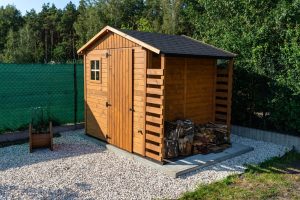
Covered Under Your Other Structures Benefit
As mentioned, your home is often more than merely the house in which you live. As a result, your other structures coverage includes many features of your property in addition to your main dwelling.
This includes such outbuildings as a detached garage, guest house, barn, pool house, tool shed, and greenhouse.
You’re also covered for such outdoor features as fences, gazebos, pergolas, pavilions, in-ground pools, sidewalks and walkways, mailboxes, decks, patios, light posts, and playground equipment.
As you can see, this coverage is pretty comprehensive. You might find that you easily have at least one — or more likely several — of the elements on this list. If you have one that seems to fit this list, but isn’t included here, simply ask your homeowners insurance agent about it.
How to Ensure You Have the Right Amount of Coverage
You have a good idea of the value of the structure if you had it installed yourself. If you had a garage built, or a storage shed set up, or a fence posted around your property, keep the estimates and receipts.
You can also photograph all of your property features and discuss their value with your homeowners insurance agent. Or go online to see what such a unit sells for in similar age and condition. You and your agent, working together, should be able to estimate the total value of your surroundings for ultimate confidence that you have the property protection you need.