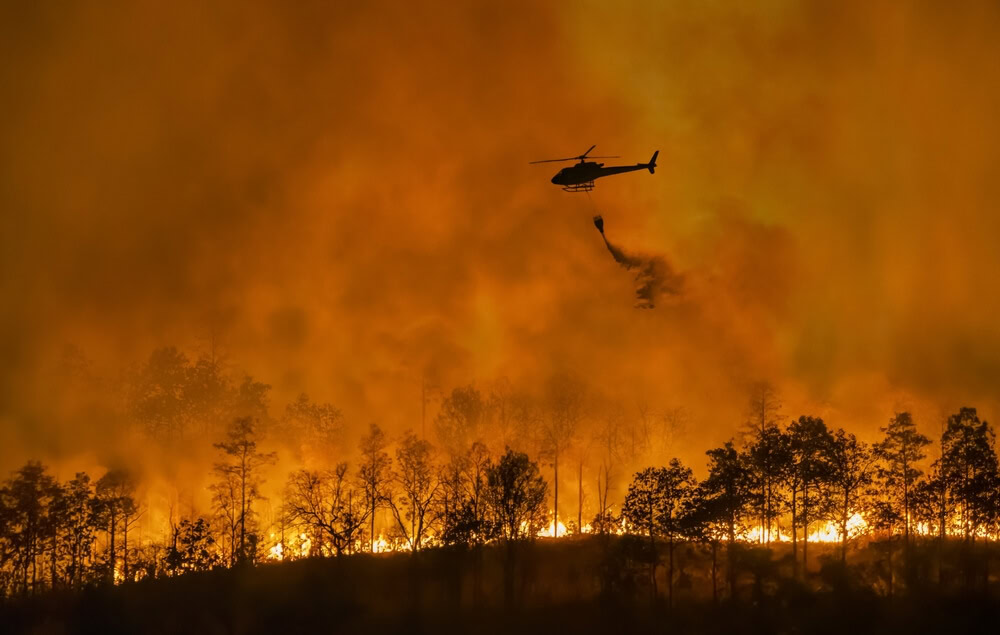
There were some 2,100 wildfires in Georgia last year — and that was considered a calm year for such blazes here. The threat is higher in the woodsy northern part of the state, a region covered by such protected woodlands as the Chattahoochee National Forest and the Oconee National Forest, as well as abundant timberland covering private property.
Are you financially secure against wildfire in northern Georgia? Does your homeowners insurance fully cover you against the risk? Is there such a thing as Georgia wildfire insurance? Take a closer look at the northern Georgia wildfire risk and what you can do to counter it and protect your home.
Understanding the Wildfire Threat in Northern Georgia
In 2023, the Peach State ranked fifth in the U.S. by the number of reported outdoor fires, with over 2,300. Most of those blazes threatened the northern part of the state. Remember all of those remarkable forests and wooded areas? They’re a splendid sight and a main attraction for visitors and residents alike — but they also pose a significant fire threat.
Timber burns. That’s actually a good thing in terms of the life and health of a forest, but obviously not such a great thing for nearby homes.
Climate change has increased the threat of these fires across the country. Longer droughts and higher temperatures leave timber tinder-dry. A tossed cigarette, a thrown spark, or a campfire not fully put out can start a fire that will consume thousands of Peach State acres before it’s extinguished.
Does Insurance Cover Wildfire Damage in Georgia?
You’re protected. In general. Probably. To some extent. Unless you’re not.
Does that sound like a rather vague way of describing your North Georgia wildfire risk and the confidence you should have in your standard homeowners policy? The issue is that your coverage for fire-related damage can vary depending on where you live. If you’re located in one of the Georgia fire zones, you might not have any financial protection at all unless you have an add-on policy known as wildfire insurance, a form of natural disaster insurance.
What Standard Homeowners Insurance Covers
Don’t worry — your standard policy covers most instances of fire and smoke damage you might encounter.
Regardless of the cause of typical house fires, whether it’s kids playing with matches, a kitchen grease fire getting out of control, or the spread of flames or smoke from a neighbor’s catastrophe, your standard policy will help cover the repairs. It will also handle the replacement cost of your family’s burned or smoke-damaged possessions, and even the cost of temporary housing while your home is being rehabbed after the flames, taking your deductible and coverage limits into consideration.
Your standard policy will also probably cover wildfire damage. That’s true unless you live in a designated fire zone. If that’s the case, your standard policy will cover every form of fire damage except wildfire destruction.
How do you know if you’re covered by your standard homeowners insurance? Read your policy or consult your neighborhood agent and ask about fire protection and whether you need specialized add-on coverage.
Additional Coverage for Comprehensive Wildfire Protection
If your agent advises you that to have comprehensive home insurance in Georgia, you’ll need additional coverage against wildfire risk, what’s meant is a policy add-on.
If you live and own a home in a part of the state where a standard homeowners policy won’t offer full coverage against fires, you can easily obtain additional coverage in the form of wildfire insurance. An independent homeowners insurance agent who has contractual relationships with numerous insurers can find you an affordable policy that will fully protect your finances against the growing threat in the northern part of the state and elsewhere.
In addition to securing such an add-on policy, there are other actions you can take to reduce the risk of losing your home to wildfire.
Enhancing Your Home’s Wildfire Readiness
If a wildfire does approach your property, you want to attempt to keep it as far away as possible. That means maintaining a fire safety perimeter of at least 30 feet. Do this by removing all flammable bushes, vegetation, debris, and other materials that might act as tinder or accelerant.
Do you have trees with branches that overhang your roof? If so, trim those limbs or even consider taking down the tree if it’s too close to your home.
Another way to minimize fire risk is to use only flame-resistant exterior siding and roofing materials on all of your structures.
When it comes to your family’s personal safety, make sure you have working smoke detectors on every floor.
Pack an emergency bag containing every item of importance to you and your family if you had to flee your premises, and keep it near your door. This might include water bottles, flashlights, extra batteries, a phone charger, and any legal documents and sentimental items you wish to protect from damage or destruction.
Reducing Premiums Through Risk Mitigation
To an insurance underwriter, there’s a logical connection between risk and premium cost: the lower the risk, the lower the premium. After all, if you reduce covered risks, there’s less of a chance that the insurer will have to pay a claim.
Ask your insurer how you should prepare your home in order to receive lower rates on your standard coverage or wildfire insurance policy. Your agent will be happy to work with you since the steps you take, including those previously mentioned, are likely to minimize the necessity of filing a claim against fire damage. That’s in everyone’s best interest.
You can also learn more ways of staying safe by reviewing this insurance fact sheet regarding wildfires.